How AI Agents Are Transforming Lead Management for Car Manufacturers in Malaysia
Executive Summary
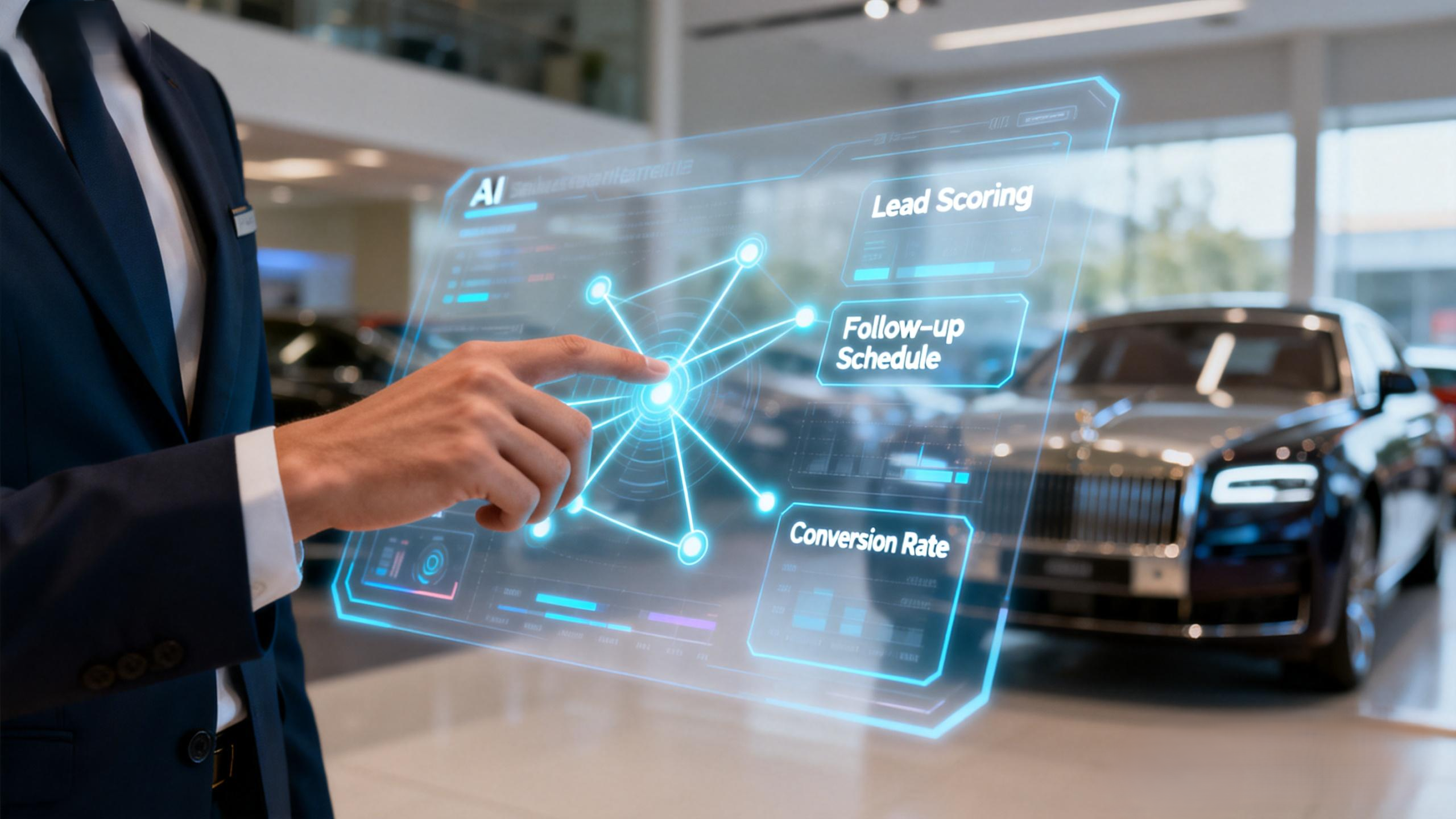
The Malaysian automotive industry is experiencing rapid digitalization, and competition among car manufacturers is fiercer than ever. Customers demand instant responses, personalized engagement, and seamless buying experiences. Traditional lead management systems struggle to keep up, leaving many leads cold or unconverted.
Enter AI agents—intelligent systems capable of capturing, qualifying, nurturing, and converting leads automatically. By implementing AI agents Malaysia solutions, car manufacturers can optimize every stage of the sales funnel, increase conversion rates, and strengthen customer relationships without exponentially increasing staff or costs.
This article explores how AI agents are reshaping lead management for Malaysian car manufacturers, complete with use cases, benefits, challenges, and implementation strategies.
The Lead Management Challenge for Car Manufacturers
Car manufacturers face unique obstacles in Malaysia:
- High Lead Volume Across Channels
Showrooms, websites, WhatsApp inquiries, and digital campaigns generate thousands of potential buyers daily. Manual processing is slow and prone to errors. - Delayed Follow-Ups
Studies show that leads contacted within the first hour are 7x more likely to convert. Traditional workflows often fail to meet this speed requirement. - Fragmented Customer Data
CRM systems are often disconnected from marketing platforms, making it difficult to maintain a 360° view of the customer. - Inconsistent Lead Scoring
Sales teams often prioritize leads subjectively, leaving high-potential prospects unaddressed while chasing less promising leads.
These inefficiencies reduce sales productivity, customer satisfaction, and ROI on marketing campaigns.
How AI Agents Revolutionize Lead Management
1. Omnichannel Lead Capture
AI agents integrate with multiple channels—website forms, WhatsApp, Facebook Messenger, social media ads, and showrooms—to capture leads instantly.
Impact:
- No lead is missed, even outside office hours
- Leads are enriched with behavioral and demographic data automatically
- Real-time updates sync with the CRM
Example in Malaysia: A Toyota dealership in Kuala Lumpur implemented an AI agent that captured leads from their website and WhatsApp inquiries, increasing lead capture by 35% in three months.
2. Intelligent Lead Qualification
AI agents automatically score leads based on engagement, intent, and behavior.
How it works:
- AI evaluates customer actions (e.g., browsing car models, requesting test drives)
- Segments leads into categories: high, medium, or low potential
- Prioritizes follow-ups for high-value leads
Benefits:
- Sales teams focus on leads with the highest chance of conversion
- Reduces wasted effort on cold or low-quality prospects
Malaysia Case Study: A Proton distributor in Penang used AI scoring to prioritize leads who had interacted with virtual car tours. Result: conversion rate increased by 18% within two months.
3. Personalized Customer Engagement
AI agents can tailor messages and offers based on customer profiles, leading to a more engaging buying experience.
Capabilities:
- Personalized greetings and recommendations
- Predictive insights based on past interactions
- Automated upselling and cross-selling (e.g., suggesting accessories, insurance, or financing)
Example: A Honda dealer’s AI agent noticed a prospect repeatedly browsing SUVs. It automatically sent updates on the latest SUV promotions and scheduled test drives. This increased test-drive bookings by 25%.
4. Automated Follow-Ups and Nurturing
AI agents handle timely follow-ups, reminders, and drip campaigns, keeping leads warm throughout the sales funnel.
Benefits:
- Ensures no lead is forgotten
- Maintains engagement with potential buyers
- Reduces manual administrative work for sales teams
Real-World Insight: Using an AI agent for follow-ups, a Nissan distributor in Johor achieved 50% faster response time to online inquiries and improved lead-to-sale conversion by 12%.
5. Real-Time Analytics and Predictive Insights
AI agents continuously analyze lead interactions and provide actionable insights for sales and marketing teams.
Key Features:
- Lead conversion analytics by source, model, or campaign
- Forecasting which campaigns or channels generate the highest ROI
- Predicting which leads are likely to convert within the next 7–30 days
Example: A dealership in Kuala Lumpur used AI analytics to discover that leads coming from Facebook ads had higher conversion rates than website form submissions, allowing them to allocate marketing budgets more effectively.
6. AI Agents in CRM Integration
Modern AI agents seamlessly integrate with existing CRM systems to synchronize all lead data.
Benefits:
- Centralized database for all customer interactions
- Automated updates of lead status
- Enables marketing automation and reporting
Impact: Malaysian car dealerships using integrated AI agents report 20–30% increase in sales team efficiencybecause they spend less time updating records and more time selling.
The Business Impact for Malaysian Car Manufacturers
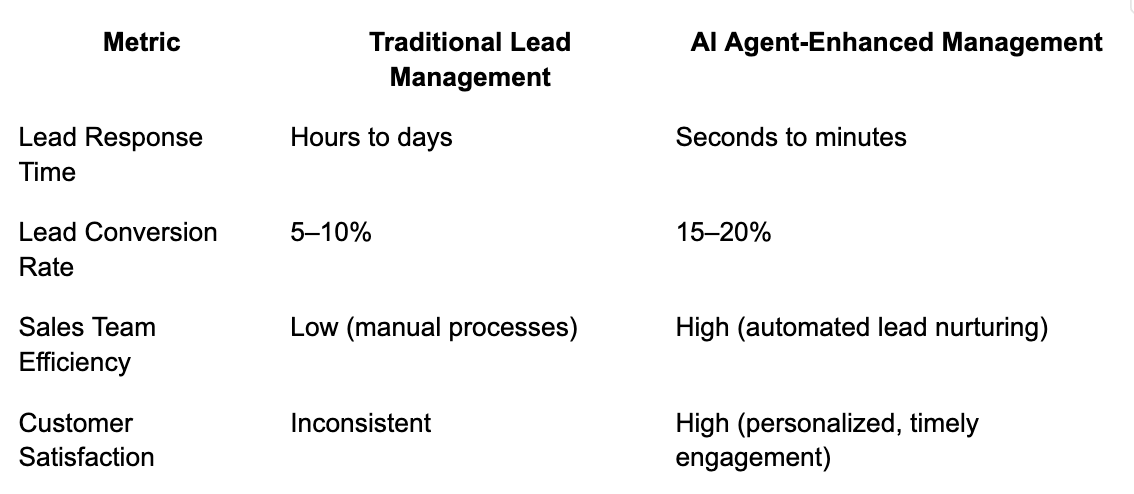
Key Takeaways:
- Faster responses = higher lead conversion
- Automated qualification = sales focus on high-potential leads
- Personalization = better customer experience and loyalty
- Predictive insights = informed business decisions
Implementation Tips for Malaysian Car Manufacturers
- Start Small: Begin with a single lead channel (e.g., WhatsApp or website) and expand gradually.
- Leverage Local Language Support: Include Malay, English, and other regional languages for better engagement.
- Integrate with CRM: Ensure AI agents feed leads and insights directly into your existing system.
- Track KPIs: Monitor lead response time, conversion rate, and engagement metrics to measure ROI.
- Continuously Train AI: Feed past lead interactions to improve recommendations, scoring, and predictions.
Challenges and Considerations
- Data Privacy & Compliance: Ensure AI solutions comply with Malaysia’s PDPA regulations.
- Integration Complexity: Align AI agents with legacy CRM systems.
- Initial Learning Curve: AI agents require time to optimize for your specific sales patterns.
- Investment Costs: While ROI is high, initial implementation requires budget allocation.
Conclusion
For Malaysian car manufacturers, AI agents are a game-changer in lead management. By automating lead capture, qualification, engagement, follow-ups, and analytics, AI agents empower sales teams to focus on closing deals and providing exceptional customer experiences.
Adopting AI agents isn’t just about technology—it’s a strategic move to accelerate sales, reduce operational inefficiencies, and stay competitive in Malaysia’s evolving automotive market.
The future of automotive sales is automated, intelligent, and data-driven. The question is: how quickly will your business implement AI agents to capture more leads and drive growth?