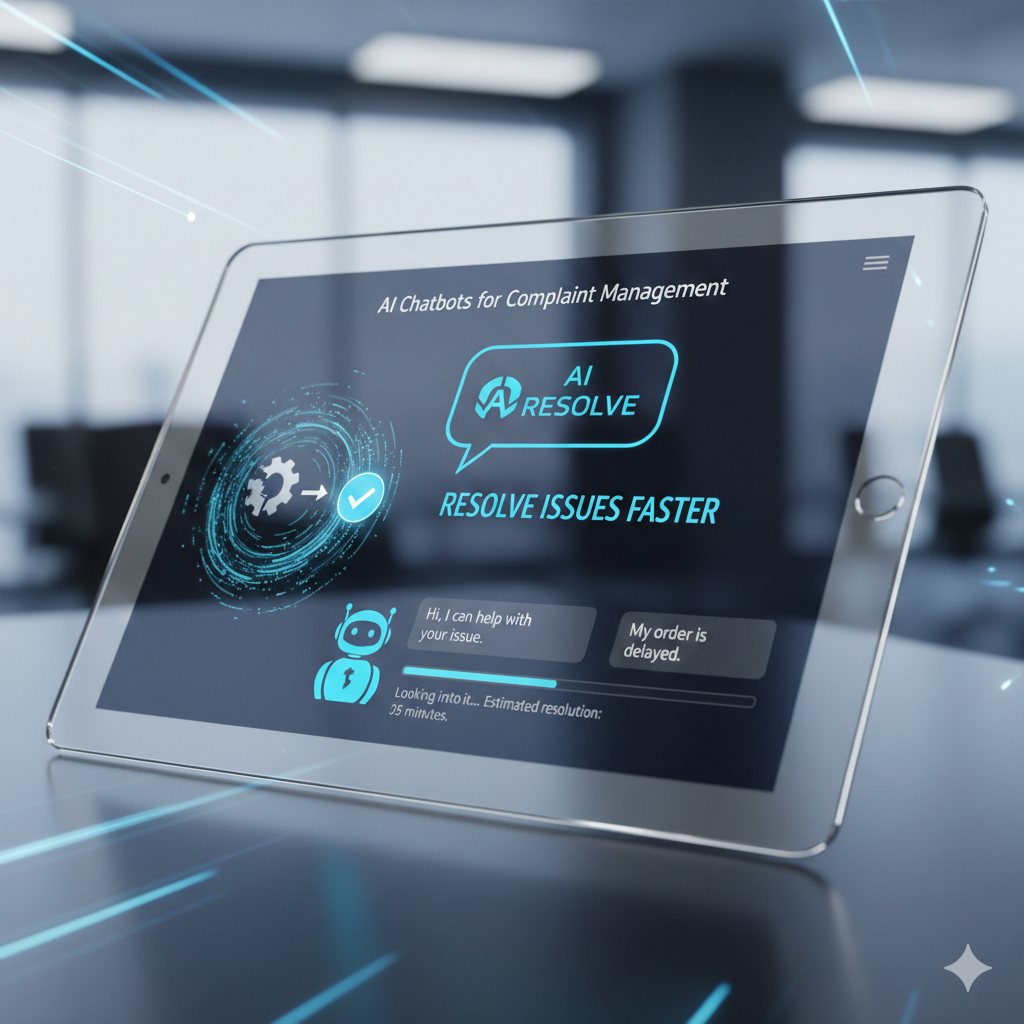
AI Chatbots for Complaint Management: Resolve Issues Faster
Executive Summary
In Malaysia, businesses across industries—retail, banking, utilities, and government services—face increasing pressure to respond to customer complaints quickly and efficiently. Traditional complaint management systems are often slow, manual, and inconsistent, leading to frustrated customers and lost loyalty.
AI chatbots provide a transformative solution, automating complaint intake, routing, resolution, and follow-ups. With AI chatbots Malaysia solutions, organizations can resolve issues faster, improve customer satisfaction, and reduce operational costs, all while providing a consistent and professional experience.
The Challenges of Traditional Complaint Management
Businesses commonly encounter these challenges:
- High Volume of Complaints
Companies often deal with hundreds or thousands of complaints across calls, emails, social media, and web forms. Manual handling delays responses. - Inconsistent Responses
Different staff members may provide varying answers to similar complaints, causing confusion and dissatisfaction. - Slow Resolution Times
Without automation, tracking complaint status, escalating urgent issues, and ensuring follow-ups is cumbersome. - Limited Analytics
Traditional systems struggle to analyze complaint trends, root causes, and agent performance effectively.
These issues can damage brand reputation and reduce customer retention.
How AI Chatbots Improve Complaint Management
1. Instant Complaint Intake
AI chatbots act as first responders, capturing complaints from multiple channels: websites, mobile apps, social media, and WhatsApp.
Benefits:
- Immediate acknowledgment of customer complaints
- Reduces wait time from hours to seconds
- Captures detailed information for faster resolution
Example: A Malaysian utility company implemented an AI chatbot on their website, capturing 80% of complaints instantly and reducing first-response time from 6 hours to under 5 minutes.
2. Automated Categorization and Routing
AI chatbots classify complaints by type, urgency, and department, ensuring issues reach the right team quickly.
Capabilities:
- Detects keywords and sentiment to prioritize urgent complaints
- Routes complaints to appropriate departments or specialists
- Tags recurring issues for analysis
Impact:
- Faster resolution for high-priority complaints
- Reduces miscommunication and internal delays
- Improves accountability
Malaysia Example: A telecom provider uses AI chatbots to route complaints about network outages to technical teams immediately, reducing response delays by 50%.
3. Personalized and Contextual Responses
AI chatbots provide consistent, accurate, and personalized answers based on customer history and complaint type.
Capabilities:
- Access past complaints and purchase records
- Provide tailored instructions or solutions
- Escalate complex issues to human agents when needed
Benefits:
- Enhances customer trust and satisfaction
- Reduces repetitive queries handled by staff
- Ensures uniform quality of responses
Case in Point: A retail chain’s AI chatbot automatically guides customers on return policies and warranty claims based on their purchase history, resolving 60% of complaints without human intervention.
4. Real-Time Tracking and Follow-Up
AI chatbots can notify customers of complaint status, follow up on pending issues, and schedule resolution updates automatically.
Benefits:
- Keeps customers informed and engaged
- Reduces frustration from uncertainty
- Ensures accountability for complaint resolution
Example: A bank in Malaysia implemented an AI chatbot to update customers about credit card disputes in real-time, cutting follow-up calls by 70% and improving satisfaction scores.
5. Data-Driven Insights for Continuous Improvement
AI chatbots generate analytics on complaint trends, root causes, and agent performance.
Benefits:
- Identify recurring issues for proactive solutions
- Optimize staffing and workflow allocation
- Enhance customer service strategies
Malaysia Case Study: An e-commerce platform used AI-generated insights to identify that delayed deliveries caused 65% of complaints, leading to process improvements and a 40% reduction in overall complaint volume.
Why Malaysian Companies Are Adopting AI Chatbots for Complaint Management
- Faster Resolutions: Customers get instant acknowledgment and solutions.
- Operational Efficiency: Reduces workload for human agents and lowers costs.
- Consistent Service Quality: Standardized responses across channels.
- Better Insights: Data analytics drive process improvements and decision-making.
Search trends like “AI chatbots Malaysia customer service” and “complaint management AI” show strong interest in automated solutions across sectors.
Implementation Tips for Malaysian Businesses
- Map Complaint Types: Identify the most frequent complaints for chatbot automation.
- Integrate Across Channels: Ensure the chatbot handles web, WhatsApp, and social media inquiries seamlessly.
- Set Escalation Protocols: Define clear triggers for human agent intervention.
- Monitor Performance: Track response times, resolution rates, and customer satisfaction metrics.
- Train Chatbots Continuously: Feed past complaints and solutions to improve AI understanding.
Challenges and Considerations
- Data Privacy Compliance: Ensure chatbot solutions comply with Malaysia’s PDPA and industry regulations.
- Complex Complaints: AI handles routine issues efficiently, but human expertise remains essential for nuanced cases.
- Integration Complexity: Some legacy systems may require technical adjustments to work with AI chatbots.
- Initial Investment: Setup costs may be high, but ROI comes from efficiency gains and improved customer retention.
Future Trends in AI Complaint Management
- Sentiment Analysis: AI can detect customer emotions for prioritizing urgent complaints.
- Predictive Issue Resolution: AI predicts potential complaints based on patterns, enabling proactive intervention.
- Omnichannel AI Agents: Unified AI across chat, email, social media, and phone support.
- Voice-Enabled Chatbots: Customers can log complaints using voice commands for faster interaction.
Key Takeaways
- AI chatbots automate complaint intake, routing, resolution, and follow-ups, freeing human agents for complex tasks.
- Customers benefit from faster, consistent, and personalized support, improving satisfaction and loyalty.
- Analytics from AI chatbots enable businesses to identify trends, improve processes, and prevent recurring issues.
Conclusion
For Malaysian businesses, AI chatbots are transforming complaint management. By adopting AI-driven solutions, companies can resolve issues faster, reduce operational costs, and provide superior customer experiences.
The future of complaint management is proactive, intelligent, and automated. Companies that implement AI chatbots today will not only retain customer loyalty but also gain a competitive advantage in Malaysia’s digital-first business environment.